
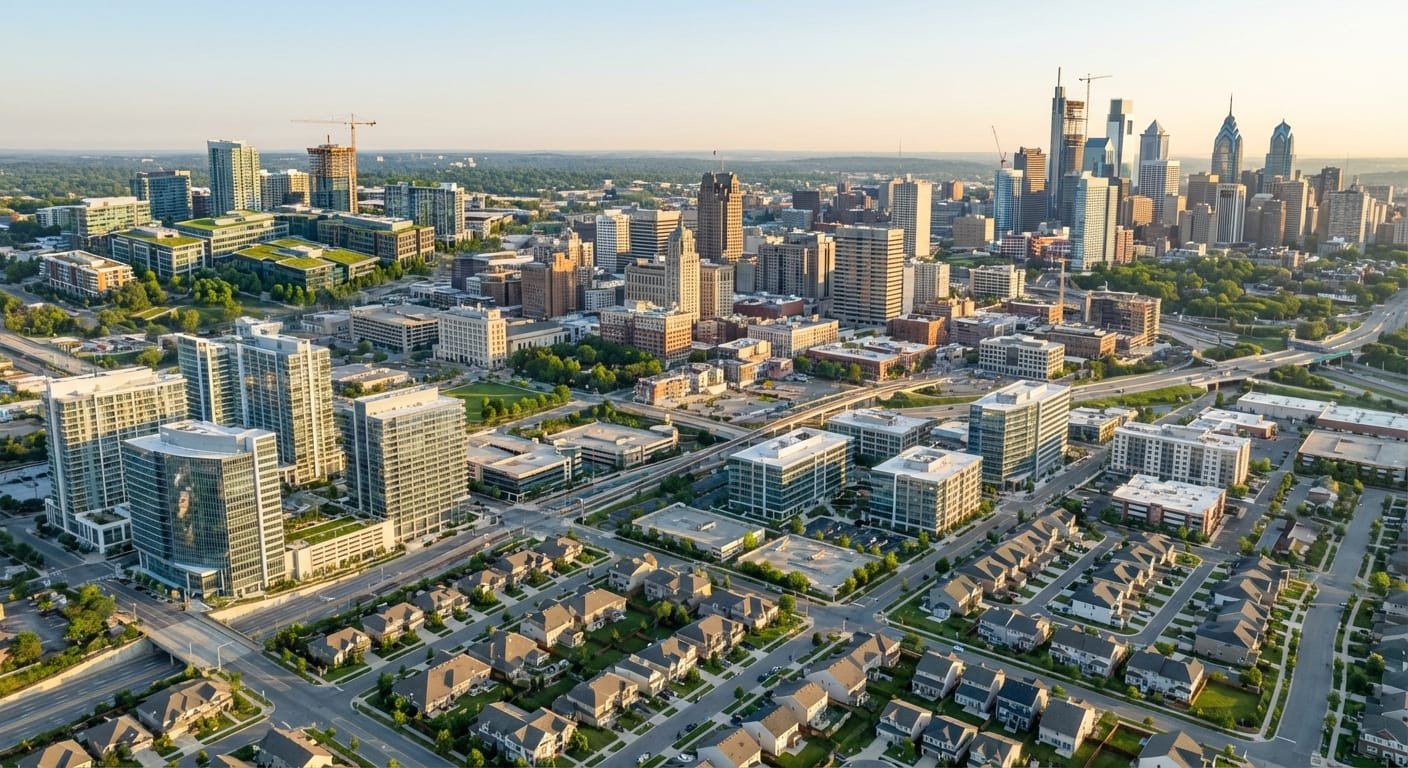
The 2026 real estate map is being redrawn by five generations of buyers, rising affordability, and region-specific catalysts, and this data-rich forecast equips readers to move first and smart: Dallas-Fort Worth's corporate magnetism and sub-national-average housing costs keep it the nation's #1 market, while Austin's slower ranking invites long-horizon buyers to lock in before Texas' 2.4-2.9 % GDP surge ripples through prices; Phoenix, Las Vegas, Tampa Bay and Orlando offer Sun Belt momentum but require vetting of insurance, storm risk and an impending 4-5 % rental-supply spike. Midwest value hubs--Columbus with 19 % more listings and winter $25 k seasonal discounts, Indianapolis rebounding on logistics and $20 k healthcare jobs, steady Kansas City, and sales-surging Milwaukee--deliver 3-5 % appreciation, 8-12 % rental yields and far less boom-bust drama. In the Northwest, Seattle's balanced inventory and AI-fuelled office rebound, Boise's 2-month supply and 4-6 % price growth, and Portland's green-migration discount despite policy headwinds give buyers multiple entry points, while remote work spreads opportunity into smaller tech-adjacent cities. Northeast revival centers on NYC's rate-locked suburban tightness, Boston's divergent town-by-town science-driven gains, and D.C.'s flight-to-quality office upgrades, all rewarding granular, street-level analysis. Across every region, the article shows how to run the numbers--job diversity, population flow, rent-to-income ratios, three-year crime trends, 65 % max LTV, 1.3x DSCR--so buyers, sellers and investors can time the projected 14 % jump in sales and 4 % price rise, dodge the 27 % insurance cost spikes and oversupplied pockets, and turn 2026's moderate-rate, data-rich environment into equity rather than uncertainty.
Understanding the 2026 Regional Real Estate Hotspots Landscape
Five generations of buyers--led by single women, boomers tapping equity, and multi-generational families--are colliding with improving affordability and a 14% sales surge, so use a data-driven checklist of at least five outperforming indicators to pinpoint the South and rebounding West markets before they fully heat up.
Demographic trends influencing demand
Here's what's driving real estate demand across the country: five generations of homebuyers are all active at once [1]. Single women are becoming a major force in the market [2], while baby boomers are using their home equity to compete with first-time buyers [2].
With 162 million Americans employed and rates starting to moderate, buyers who've been waiting on the sidelines are ready to jump back in [1]. Multi-generational families are also reshaping demand, looking for larger homes that work for extended families [1].
Economic indicators and client‑first transparency
Let's break down what the economic numbers actually mean for homeowners. The good news: housing affordability is improving for the third year straight. For the first time since 2022, average families can qualify for mortgages on median-priced homes again [5].
The National Association of REALTORS(R) expects home sales to jump 14% with prices rising a modest 4% [4]. That's a healthy, sustainable market--not the wild swings we've seen before. Different regions tell different stories.
The South keeps leading in growth, the West is bouncing back, while the Northeast and Midwest face some workforce challenges [5]. What matters is finding markets that outperform on at least five key indicators--things like job growth, population trends, and housing demand [4].
How data analytics ensure operational excellence
Smart data makes all the difference in today's market. Top-performing markets aren't just lucky--they're identified through systematic analysis of ten key indicators covering everything from job growth to housing demand [4]. Markets need to beat national averages on at least five of these factors to be considered true hotspots [4].
This data-driven approach works at every level. Professional economists track trends that help predict when markets will heat up or cool down [5]. For example, data shows commercial real estate investment jumping 16% in 2026 to $562 billion--that kind of intelligence helps buyers and sellers time their moves right [5].
In fast-moving markets like Dallas and San Francisco, real-time data becomes even more crucial for making informed decisions [6]. The bottom line: whether you're buying, selling, or investing, having the right data transforms guesswork into strategy.
Sun Belt Surge: High‑Growth Cities to Watch
Dallas-Fort Worth's corporate magnetism and Austin's long-haul job growth--both turbo-charged by Texas' 2.4-2.9 % GDP surge--create a corridor where buyers can lock in sub-national housing costs before 2026's apartment drought tightens the market.
Austin‑Dallas corridor: smart value opportunities
The Dallas-Fort Worth to Austin corridor shows two different market stories heading into 2026. Dallas holds steady as the nation's top-ranked real estate market, while Austin has slipped from 15th to 30th place [7]. This split creates clear opportunities for buyers and sellers who understand each market's unique dynamics. Dallas brings stability through its diverse economy that looks like America's economy as a whole--making it naturally bounce back from downturns [7]. The metro's business-friendly approach has drawn 100 corporate headquarters between 2018 and 2024, creating steady demand from new workers and their families [8]. With average rent at $1,577 (just 1% above the national average) and housing expenses 6% below national figures, Dallas delivers affordability alongside economic strength [8].
Meanwhile, Austin still leads Texas in projected job growth rate despite its ranking drop [7], making it an interesting option for buyers planning to stay put for several years. The economic corridor between these cities benefits from Texas's projected 2. 4-2. 9% GDP growth in 2026, outpacing the national forecast of 2-2. 6% [9]. This growth differential supports real estate fundamentals throughout the corridor, with the state expecting to add 1.
3-1. 7% more jobs versus 0. 8-1. 2% nationally [9]. For the rental market, Texas will see far fewer new apartments built in 2026--under 35,000 units statewide (just 1. 4% growth)--which should help stabilize rents after recent drops [9].
Phoenix & Las Vegas: resilient market fundamentals
Phoenix and Las Vegas show staying power through different strengths. Phoenix's housing market is finding its balance--not crashing--as the city's economy grows faster than the nation's thanks to new tech, healthcare, and manufacturing jobs [11]. This job variety protects against major price drops, even with the market index at 80--what experts call "the best buyer opportunity in years" for those ready to negotiate [11]. Sales have risen from their 2023 trough as mortgage rates stabilized in the low 6% range, though mid-tier neighborhoods remain 10-15% below pandemic peaks [11].
Las Vegas keeps its balance with 4. 6 months of home supply--right in the sweet spot--even as available homes dropped from 7,300 to 6,800 and monthly sales slowed from 1,600 to 1,450 [10]. Las Vegas benefits from large investors who own about 15% of homes. While they're not buying like they did in 2021-2022, they're holding onto properties as rentals, which helps keep prices stable [10].
Both markets face structural supply constraints with Phoenix's construction limited by labor shortages and higher financing costs [11], while Las Vegas's built environment continues expanding with major sports and entertainment developments that strengthen its economic base [10]. These strong foundations position both cities to do well as the broader real estate market recovers in 2026.
Tampa Bay & Orlando: emerging demand patterns
Tampa Bay and Orlando demonstrate distinct market recovery patterns heading into 2026, with inventory finally expanding after years of constraint. Tampa Bay closed 2025 with 19,941 active listings--an 11% year-over-year increase [13]--signaling a market recalibration rather than correction. This inventory growth gives buyers negotiating power they haven't had since before the pandemic. Sellers now sweeten deals with new appliances or by covering closing costs [13]--opportunities smart sellers can counter with the right pricing strategy.
Florida stands to gain big from improving conditions. Even a small rate drop unlocks major demand--just moving from 7% to 6% would bring over 6,000 new buyers monthly into Orlando alone [12]. Despite sales volume dropping 4. 6% in 2025 compared to the previous year (and 24% below 2019 levels), these markets maintain strong fundamentals through persistent migration, with 27% of Florida's new residents coming from other states and 5% from abroad [12].
New construction in Hillsborough and Pasco counties offers affordability options, with builders providing generous concessions to move inventory built during the population surge [13]. The regional insurance landscape has dramatically improved, with reforms attracting 17 new insurers to Florida while Citizens Property Insurance reduced its policy count below 400,000--stabilizing a critical market component that previously deterred buyers [12]. This mix of more homes for sale, mortgage rates settling near 6. 1%, and continued migration creates a unique window for buyers and sellers in Tampa Bay and Orlando.
Investment risk profile and client‑first due diligence
Sun Belt markets need careful evaluation, with some areas facing unique challenges. Orlando, Austin, Miami, Nashville, and Phoenix could see rental supply jump 4% to 5% in 2026 and 2027--potentially too many rentals even with strong job growth. Rising costs hit hard too--operating expenses up 7. 1% overall, with insurance skyrocketing 27.
7% in coastal areas [14]. Smart buyers protect themselves by borrowing conservatively--keeping mortgages under 65% of property value ensures breathing room when markets shift [14]. Coastal Sun Belt spots need extra homework--check insurance costs, storm risks, and HOA fees that can eat into your returns [15]. Don't treat the Sun Belt as one big market--each city has its own population trends, job mix, and local rules that affect property values [15].
This detailed approach helps find hidden gems in smaller markets while steering clear of overpriced areas. The smartest move? Sort markets into three buckets: top performers with strong basics, steady markets with predictable returns, and struggling areas showing early warning signs [15].
Midwest Value Hubs: Balancing Affordability and Growth
Columbus and Indianapolis are quietly delivering Midwestern gold: steady 3% price growth, 19% more inventory, and winter savings of $25,000--while logistics and healthcare job booms keep future demand locked in.
Columbus, Ohio: affordable expansion with operational excellence
Columbus just landed on NAR's "10 Home Buying Hot Spots to Watch in 2026," and here's why that matters for you: the market's finally working in buyers' favor again [16]. With 2,193 homes selling last November--a solid 2. 2% increase from the previous year--Columbus proves you don't need a red-hot market to find opportunity [17]. At a median price of $325,000 (up just 3. 2%), you're looking at steady appreciation without the wild swings that make planning impossible [17].
What makes Columbus special? For starters, you've got real choices now. Available homes jumped 19. 5% to 5,497 listings, and properties sit on the market for 40 days--that's 29% longer than last year, giving you actual time to think through your decision [17]. Plus, with millennials making up 37.
5% of households here, you're investing in a market with built-in future demand [16]. Here's the smart money move: winter buyers save serious cash. The median price drops from $350,000 in summer to $325,000 in winter--that's nearly $25,000 in seasonal savings [17]. And when mortgage rates drop to 6% (as many predict), an additional 41,000 households could qualify for homes, potentially pushing prices up [16]. Unlike those potentially oversupplied Sun Belt markets, Columbus walks that perfect line between growth and stability--exactly what you want whether you're buying your first home or your fifth [17].
Indianapolis: strategic logistics and smart value
Indianapolis might not grab headlines like coastal markets, but that's exactly why savvy buyers are paying attention. The city's hitting its stride in 2026 as the logistics and warehouse market rebounds from recent oversupply--think of it as buying when everyone else is still worried [19]. What's driving Indianapolis?
Start with prices 10% below the national average--that means your dollar goes further here [20]. The healthcare sector alone is adding 20,000+ jobs, creating steady demand for housing [20]. And here's something interesting: major developments like the Eli Lilly LEAP District are transforming entire neighborhoods, making nearby properties prime targets for appreciation [19].
For homebuyers, the sweet spot is finding properties near these job centers before prices catch up. The city's pulling in new residents from pricier metros who've discovered they can actually afford a quality life here [20]. This isn't about chasing quick gains--it's about finding real value in a market that delivers steady returns without the drama of boom-and-bust cycles [18].
Kansas City: emerging tech corridor and trust through experience
Kansas City delivers something rare in today's market: predictability you can count on. While other cities ride the rollercoaster, KC maintains steady 3-5% annual appreciation--perfect for buyers who prefer sleeping well at night over chasing risky returns [21]. The city's quietly building a tech powerhouse, with strengths in data centers, battery manufacturing, and biosciences creating diverse job opportunities [22]. Yes, Oracle's acquisition of Cerner caused some disruption, but manufacturing giants like Garmin, Honeywell, and Panasonic are more than picking up the slack [22].
Where should you look? The Crossroads Arts District and downtown core are magnets for young professionals, driving demand and supporting strong rental returns of 8-12% [23]. These aren't just trendy neighborhoods--they're backed by real economic growth [23]. Kansas City's superpower is consistency.
No dramatic peaks, no scary valleys--just reliable performance year after year. For homebuyers tired of timing games and bidding wars, this market rewards patience with genuine value [22].
Milwaukee: revitalization and transparent forecasting
Milwaukee's turning a corner in 2026, and smart buyers are taking notice. After home prices jumped 8. 7% last year, the market's cooling to a more sustainable 1-2% appreciation--but here's the kicker: sales volume is expected to surge 10-15% [24]. Translation? More homes to choose from without the bidding war madness. The numbers tell the story: with mortgage rates settling in the low-6% range, that half-point drop saves you about $155 monthly on a typical $365,000 home [24].
For the first time since 2020, your monthly payment will actually be lower than last year--down 1. 3% [24]. That's real money back in your pocket. What's fueling Milwaukee's momentum? Microsoft's $7 billion datacenter and the massive $15 billion Stargate Partnership are transforming the city into a tech hub [24]. Remote workers from expensive coastal cities are discovering they can keep their big-city salaries while actually affording a home here [24].
The hot neighborhoods? Bay View, Walker's Point, and Whitefish Bay command premium prices for good reason--they offer that walkable, amenity-rich lifestyle everyone wants. But timing matters: shop in early spring and you'll face the most competition. Wait until late summer, and you'll find more negotiating room [24].
Pacific Northwest Innovation and Sustainable Growth
Seattle's 2026 tech-driven real estate surge--featuring 30% jumps in apartment sales and the strongest office leasing since the pandemic--offers prime opportunities near AI hubs, while Portland's green-living appeal creates undervalued prospects for patient investors willing to navigate permitting delays and downtown vacancies.
Seattle tech ecosystem and smart value investments
Seattle's real estate market offers a rare buyer's advantage in 2026, with inventory back to normal levels and prices holding steady [25]. This shift creates real opportunities for homeowners and investors ready to act. The tech sector continues driving the local economy, keeping job growth strong even when other markets struggle [26]. This tech boom shows up clearly in the numbers--apartment building sales jumped over 30% last year, hitting $1.
8 billion in just one quarter [27]. What does this mean for you? AI companies are bringing workers back to offices, making 2026 the strongest year for office leasing since the pandemic [25]. Properties near these tech hubs, especially older buildings ready for updates, offer the best value compared to pricey new construction [25].
While average rent increases stay modest at about 2. 4%, the fundamentals remain solid [25]. Seattle added 75,000 new residents since 2019, with nearly half holding college degrees [26]. This educated, tech-savvy workforce keeps demand strong in key neighborhoods, even as the overall market finds balance.
Portland's sustainability initiatives and client‑first benefits
Portland presents a challenging but potentially rewarding market in 2026. The city ranks near the bottom (80th out of 81) for investment prospects, facing real obstacles like 33% downtown office vacancy and some of the nation's highest property taxes [28]. Slow permitting adds another layer of difficulty [28]. Yet this situation creates opportunities for those who look deeper.
Portland's commitment to green living--through light rail expansion and renewable energy--continues attracting buyers from California and other western states seeking better work-life balance [29]. These climate-conscious residents value what Portland offers, even if big investors remain skeptical. The disconnect between Portland's livability and its investment rankings suggests potential for those willing to take a longer view. The city needs practical changes to improve its outlook.
Other cities have shown the way with tax breaks, faster approvals, and business-friendly teams that Portland could adopt without sacrificing its environmental values [28]. Without these reforms, Portland risks becoming what critics call a "beautiful, progressive, and increasingly irrelevant" market [28]. For homeowners and buyers who understand both the risks and the potential, this pivotal moment offers unique opportunities in an overlooked market.
Boise's rapid appreciation and operational efficiency
Boise shows how a healthy market should work in 2026. Ada County homes hold steady at $525,000, while more affordable Canyon County rose 6. 47% to $435,000 [30]. This price difference creates real opportunities for buyers at different budget levels. The market stays strong with solid sales numbers--Ada County saw 8,961 home sales (up 7.
98%) while Canyon County hit 5,000 sales (up 4. 93%) [30]. With only about 2 months of inventory in both counties, homes move quickly [30]. What's driving this strength? The Treasure Valley adds about 2,000 new residents every month, keeping demand steady without creating bubble conditions [30].
Looking ahead, expect 4-6% yearly price growth--meaning a $400,000 home today could gain $20,000-$24,000 in value each year [32]. This steady appreciation comes from California and Washington buyers seeking affordability, plus Idaho's growing job market in tech, manufacturing, healthcare and education [31][32]. Homes in Ada County sell in just 36 days on average, same as last year, showing the market knows how to price properties right [30]. Canyon County's stronger growth reflects buyers choosing affordability--a smart trend that shows how payment concerns now drive decisions [30]. This balanced growth pattern makes Boise an ideal market for both sellers timing their exit and buyers planning their entry.
Remote‑work driven hubs across the Northwest
Remote work changed everything for Northwest real estate, opening up opportunities in smaller cities that big investors previously ignored. Markets like Boise now lead the nation in projected job growth through 2030, thanks to younger workers and reasonable home prices [7]. Each state's new rules affect what works for buyers and sellers. Washington caps rent increases at 7% plus inflation (10% max), but exempts new construction for 12 years [33]. This has developers rethinking apartment projects [33].
Oregon takes a different approach, speeding up permits and helping with infrastructure costs to encourage building [33]. Right now, apartment vacancy rates sit at historic highs as all the units built from 2023-2025 hit the market [34]. But here's the opportunity--experts expect things to balance out by late 2026 as construction slows and renters catch up [34]. Smart buyers who act during this temporary oversupply could see solid gains. The suburban shift continues strong.
Areas like Central Oregon and Southwest Washington attract buyers with lower costs, safer neighborhoods, and growing demand [33]. Even tech hubs like San Jose and San Francisco bounced back, jumping over 20 spots in market rankings [7]. Remote work spread prosperity beyond city centers, creating opportunities throughout the Northwest for those who know where to look.
Northeast Revitalization: Urban Core and Suburban Upswing
As low-rate homeowners stay put and city inventory shrinks 9%, suburban rings around New York and Boston's tech corridors now deliver the strongest price momentum and renovation arbitrage for buyers willing to look beyond the core.
New York metro suburbs: demand shift and transparent analysis
New York metro suburbs are seeing a clear shift in buyer interest, with more families looking beyond Manhattan and Brooklyn for better value. While NYC's median home prices climbed just 2. 1% year-over-year to $770,000, suburban areas offer more space for the money--attracting both city residents ready for a change and those seeking their first home [35]. This movement toward outer areas creates real opportunities, especially with citywide inventory down 9% compared to 2024 [35]. Brooklyn's 3.
8% price growth compared to Manhattan's modest 1. 5% shows buyers are exploring beyond traditional core areas [35]. What's keeping inventory tight? The "mortgage rate lock-in effect"--with nearly 70% of homeowners holding rates below 5%, many are staying put rather than giving up their low monthly payments [36]. This creates a unique market where suburban prices stay strong while homes for sale remain scarce.
Timing matters more than ever--spring (March-May) and fall (September-November) bring the most buyer activity and strongest offers [36]. Here's what smart sellers should know: the market often undervalues homes needing updates. Properties requiring $350,000 in renovations might see price cuts of $500,000--that's a $150,000 gap savvy buyers are jumping on [36]. This pricing disconnect creates opportunities for sellers who understand their home's true potential. Brooklyn's steady absorption of new inventory shows these suburban markets can handle supply without major price drops [36].
Boston's innovation districts and smart value positioning
Boston's innovation districts--especially Cambridge and Kendall Square--drive the entire region's real estate market. These tech and life sciences hubs, backed by MIT, Harvard, and major pharmaceutical companies, create demand that spreads to surrounding neighborhoods [38]. As we enter 2026, Boston's housing market shows interesting splits: while commercial space stabilizes, residential properties continue seeing strong buyer interest and rent growth, even as some life science buildings sit empty [37]. This creates a market where location matters more than ever. Each Boston suburb tells a different story.
Arlington has become the go-to choice for families leaving the city, with median prices hitting $1. 2 million after a 25. 3% jump. Meanwhile, East Lexington bucks the trend--prices there actually dropped 9. 27%, creating unexpected opportunities in this typically pricey area [38].
Winchester leads the premium market with median prices soaring 35. 2% to $1. 656 million, while the Medford/Somerville border offers long-term potential tied to life sciences job growth projected at 32% by 2032 [38]. Boston and Cambridge specifically should see 4-6% price growth in 2026, beating the statewide 3-5% projection [39]. Understanding these neighborhood differences helps sellers price strategically and buyers find value in a complex market [39].
Philadelphia redevelopment projects with operational excellence
Washington, D. C. smart urban planning and trust through experience Washington, D. C. 's office market still struggles in 2026, lagging behind cities like Los Angeles, San Francisco, and Manhattan where offices are filling up again [5]. D. C.
joins Denver and Chicago in needing "more time to achieve a new normal" as workers remain reluctant to return downtown [43]. But this slower recovery creates opportunities for those who understand where the market's heading. The split is clear: modern, tech-enabled buildings stay busy while older spaces risk becoming obsolete [43]. D. C. 's path forward involves upgrading existing buildings with the amenities that work elsewhere. Take JPMorganChase's new headquarters as the model--it features "a building automation system equipped with more than 100,000 sensors" plus wellness centers with "fitness areas, medical services, mothers' rooms and meditation spaces" [43].
These improvements create spaces people actually want to work in, positioning properties to benefit as office leasing nationwide is expected to "surpass 2019 levels" in 2026 [5]. Property owners who embrace these upgrades can succeed even in D. C. 's challenging market. For homeowners near these evolving districts, understanding which buildings are modernizing helps predict neighborhood value trends.
Strategic Investment Framework for 2026
Use data-driven due diligence--tracking three-year crime trends, rental-yield stability, void-period forecasts, price-volatility recovery speeds, tightening regulations, and conservative 65 % LTV/1.3x DSCR structures--to pick markets where improving safety and overlooked fundamentals deliver 11 % extra appreciation while shielding cash flow from sudden policy shocks.
Client‑first due diligence checklist for regional hotspots
Modern real estate due diligence has evolved from intuitive assessments to data-driven decision frameworks that quantify risk and opportunity across regional markets. The foundation of effective market evaluation starts with crime trend analysis, where investors should focus on three-year directional patterns rather than static crime rates - neighborhoods showing improving safety trends outperform deteriorating areas by 11. 3% in property appreciation over five-year periods [44]. Rental yield stability offers critical market insights, with properties yielding 150+ basis points above neighborhood medians showing 4. 2x higher probability of rental income disruption within 24 months [44].
Effective due diligence must include void period forecasting to quantify potential cash flow disruptions, as differential vacancy periods can swing IRR by 2-4 percentage points over a 10-year hold period [44]. Price volatility analysis provides essential historical drawdown sensitivity - areas with quick recovery velocity demonstrate mean reversion while extended recovery timelines indicate structural market weakness [44]. Regulatory risk assessment has become increasingly crucial as policy interventions can restructure market economics overnight - properties in jurisdictions with expanding regulatory frameworks often face systematic margin compression that traditional appraisal models don't capture [44]. Investors should maintain conservative financial structures with loan-to-value ratios under 65% and debt service coverage ratios above 1. 3x to ensure property income adequately covers operations and debt payments [45].
For regional market selection, move beyond broad national assessments to market-by-market evaluation using metrics like population growth rates, job market diversification, and regulatory environment - this granular approach enables identification of overlooked opportunities while avoiding overheated areas [45]. Cybersecurity protection must become standard practice through regular password updates, two-factor authentication implementation, and verification protocols for wire transfers given the large sums and sensitive data involved in real estate transactions [46]. Finally, successful due diligence requires integrating AI-powered analysis tools that can process property valuation data, demographic trends, and economic indicators to identify emerging patterns that manual analysis might miss [46].
Risk management aligned with operational excellence
Successful real estate investment in 2026 requires integrating risk management directly into operational processes rather than treating them as separate functions. With nearly 90% of industry leaders citing interest rates as their primary concern [47], investors need operational strategies that account for financial volatility. This integration starts with stress-testing investment plans against higher-than-expected interest rates and renovation costs before acquisition, creating a margin of safety against market shifts [47].
Conservative financial structures have become operational necessities rather than optional precautions--maintaining loan-to-value ratios under 65% and implementing scenario analysis across portfolios preserves flexibility when market conditions change unexpectedly [48]. The beginning of a new commercial real estate cycle in 2026 demands operational excellence through data-driven decision making, with investors leveraging analytics for rental demand projections, population trends, and pricing inefficiencies [48][49]. This analytical approach extends to construction and replacement cost inflation management, which directly impacts operational timelines and budgeting accuracy [48].
For fix-and-flip investors specifically, the rising average renovation cost of $80,000 requires operational adjustments to preserve margins, including potential investor-to-investor exit strategies that now represent 28% of flipped property sales [47]. Markets experiencing softening, particularly in the Sun Belt, require especially rigorous operational protocols where regular reassessment of timing strategies and exit options becomes essential to portfolio performance [47]. This integration of risk management and operations creates resilient investment structures capable of weathering volatility while capitalizing on the projected 14% increase in home sales [47].
Leveraging real‑time data for smart value decisions
Real estate decision-making has shifted from macroeconomic factors to granular, asset-level analytics that reveal precise investment opportunities. This micro-focused approach lets investors target specific sectors and submarkets rather than broad regional plays, with performance differentiation becoming more pronounced as demographic shifts and return-to-office patterns solidify [50]. Professional economists and data scientists now provide critical intelligence on ten specific economic, demographic, and housing indicators, enabling investors to identify markets outperforming national averages on at least five key metrics [7]. This data-driven methodology creates measurable competitive advantages, particularly in complex markets like Dallas where infrastructure expansion requires precise operational planning [7].
The timing advantage proves equally valuable--with commercial real estate investment projected to increase 16% to $562 billion in 2026, predictive analytics position investors ahead of market movements rather than reacting to them [5]. Investors should focus on asset-level performance indicators in 2026 as cap rate compression will be minimal (5-15 basis points for most property types), making income growth the primary driver of returns [50]. This requires sophisticated cash flow modeling rather than relying on valuation increases. Structural forces like supply chain realignment and demographic shifts have created unprecedented market segmentation, with data revealing widening performance gaps between prime and secondary assets [5].
For example, in office markets, analytics indicate growing scarcity of available prime space while secondary locations struggle with increasing vacancy, a nuance invisible to macro-level analysis [5]. Forward-looking indicators from predictive models provide early warning signals across asset classes--multifamily analytics show which Sun Belt markets face 4-5% supply growth versus sustainable 1-2% levels, allowing for targeted positioning before market corrections [5].
Future‑proofing portfolios without compromise
Future-proofing real estate portfolios requires balancing long-term structural forces with near-term market dynamics. Effective strategies now emphasize diversification across asset classes--placing 2026 capital in multifamily, build-to-rent communities, and selective industrial assets that demonstrate resilience regardless of economic cycles [53]. Interest rate volatility demands active hedging through fixed-rate debt structures that insulate portfolios from financing cost fluctuations [53].
Markets showing economic diversification that mirrors the national economy naturally build resilience against potential downturns, with institutional investors increasingly focused on green-certified buildings that achieve higher rents, sale prices, and occupancy rates [53]. Portfolio structure should reflect the convergence between public and private credit markets, providing flexibility as traditional financing sources remain selective [51]. For commercial real estate specifically, technology integration has become non-negotiable--AI and PropTech solutions streamline operations, automate analysis, and enhance tenant experiences while advanced analytics enable optimization of leasing strategies and building performance [52].
As Kevin Thorpe, Chief Economist at Cushman & Wakefield notes: "If 2025 was a test of resilience, 2026 has real potential to reward it" [52]. This reward requires continuous portfolio adaptation, with regular rebalancing to maintain optimal asset allocation that capitalizes on emerging opportunities while mitigating potential risks [53].
- Dallas-Fort Worth remains the nation's top-ranked market with housing costs 6% below U.S. average and steady corporate job influx.
- Sun Belt rental oversupply risk: Austin, Orlando, Phoenix face 4-5% new supply vs sustainable 1-2%, pressuring rents.
- Columbus offers winter buyers $25k seasonal savings, 19.5% more listings, and 40-day market time for deliberate decisions.
- Coastal Sun Belt insurance costs surged 27.7%, requiring buyers to factor storm risk, HOA fees into total ownership math.
- Northeast suburban shift accelerates: NYC inventory down 9%, Brooklyn outperforms Manhattan 3.8% vs 1.5% price growth.
- Data-driven hotspot criteria: markets must beat national averages on ≥5 of 10 indicators covering jobs, population, housing demand.
- Conservative leverage rule: keep mortgages under 65% LTV and DSCR above 1.3x to survive rate spikes and operating cost inflation.
- https://www.housingwire.com/articles/barry-habib-logan-mohtashami-say-housing-market-set-for-pent-up-demand-surge/
- https://www.nar.realtor/magazine/real-estate-news/2026-real-estate-outlook-what-leading-housing-economists-are-watching
- https://www.spglobal.com/market-intelligence/en/news-insights/research/2026/01/top-us-regional-economic-insights-2026
- https://www.nar.realtor/newsroom/national-association-of-realtors-unveils-top-10-homebuying-hot-spots-for-2026
- https://www.cbre.com/insights/books/us-real-estate-market-outlook-2026
- https://www.avisonyoung.us/outlook/2026-annual
- https://www.pwc.com/us/en/industries/financial-services/asset-wealth-management/real-estate/emerging-trends-in-real-estate-pwc-uli/markets-to-watch.html
- https://www.cnbc.com/2025/11/06/top-real-estate-markets-to-watch-in-2026-pwc-report.html
- https://trerc.tamu.edu/article/2026-texas-real-estate-forecast/
- https://www.ricelasvegas.com/investment-housing-trends-las-vegas/
- https://azbigmedia.com/real-estate/here-is-the-outlook-for-phoenixs-2026-housing-market/
- https://www.floridarealtors.org/newsroom/2026-real-estate-trends-fla-housing-market-stabilizing-buyer-demand-builds
- https://www.tampabay.com/news/real-estate/2026/02/05/buying-or-selling-your-home-tampa-bay-real-estate-trends-watch-2026/
- https://primior.com/modern-real-estate-investing-options-to-know-in-2026/
- https://www.rentastic.io/blog/rentastic-92701
- https://www.ohiorealtors.org/blog/2282/ohio-housing-markets-land-in-the-national-spotlight-for-2026/
- https://ritaboswellgroup.com/blog/2026-Housing-Market-Forecast-Columbus-Ohio
- https://www.noradarealestate.com/blog/best-midwest-real-estate-markets-for-investors-in-2026/
- https://caraconde.com/blog/the-indianapolis-industrial-market-2026-deep-dive-a-strategic-investment-guide-post-supply-surge
- https://caraconde.com/blog/indys-2025-housing-market-year-in-review-key-trends-neighborhood-insights-and-what-to-expect-in-2026
- https://www.yourkcseller.com/blog/517/Greater+Kansas+City+Housing+Market+Outlook+2026%2C+A+Balanced+Year+For+Buyers+And+Sellers
- https://www.marc.org/news/economy-housing/kansas-city-metros-2026-economic-outlook
- https://www.jakenfinancegroup.com/kansas-city-st-louis-mos-housing-trends-in-2026
- https://wisconsinhavenrealty.com/2026-greater-milwaukee-home-real-estate-outlook/
- https://www.seattletimes.com/business/real-estate/five-projections-for-seattles-real-estate-market-in-2026/
- https://greater-seattle.com/2025/12/17/greater-seattle-economic-outlook-2026/
- https://kidder.com/news/2026/02/report-seattle-ranks-as-a-top-market-for-investment/
- https://www.paroa.org/post/portland-s-rock-bottom-ranking-in-the-2026-emerging-trends-report-a-five-alarm-wake-up-call-for-ore
- https://www.jakenfinancegroup.com/pacific-northwest-trends-oregons-housing-market-in-2026
- https://www.weknowboise.com/blog/housing-market-forecast-2026.html
- https://www.jvmlending.com/blog/idaho-real-estate-market-forecast/
- https://homefoundboise.com/post/boise-housing-market-forecast-2026
- https://www.schwabe.com/publication/2025-real-estate-construction-outlook-in-the-pacific-northwest/
- https://www.hfore.com/pacific-northwest-multifamily-outlook-2025-26-portland-housing-shake-up-cooling-rents-and-washington-rent-caps/
- https://www.modernrealtyusa.com/new-york-city-real-estate-market-overview-forecast-2025-2026/
- https://www.forbes.com/sites/johnwalkup/2026/01/23/a-quiet-co-op-comeback-and-other-2026-nyc-real-estate-predictions/
- https://www.cbre.com/insights/reports/boston-2026-u-s-real-estate-market-outlook
- https://www.davidlenoirhomes.com/blog/beyond-boston-6-greater-boston-suburbs-poised-for-growth-in-2026/
- https://www.jvmlending.com/blog/massachusetts-real-estate-market-forecast/
- https://centercityphila.org/pressroom/greater-center-city-philadelphia-sees-over-2-1b-in-real-estate-development-activity
- https://whyy.org/articles/center-city-development-residential-creative/
- https://www.cbre.com/insights/reports/philadelphia-2026-u-s-real-estate-market-outlook
- https://www.jpmorgan.com/insights/real-estate/commercial-real-estate/commercial-real-estate-trends
- https://www.propvet.io/blog/real-estate-due-diligence-the-data-driven-guide-for-2026
- https://www.morganstanley.com/im/en-us/individual-investor/insights/outlooks/real-estate-2026-outlook.html
- https://www.kiavi.com/blog/your-2026-real-estate-investment-checklist-prepare-plan-and-profit
- https://www.kiavi.com/blog/key-real-estate-investment-trends-for-2026-dont-get-left-behind
- https://www.morningstar.com/news/accesswire/1134575msn/real-estate-investment-in-2026-strategic-growth-market-trends-and-long-term-value-creation
- https://inland-investments.com/insights/2026-outlook-webinar-replay
- https://www.morganstanley.com/im/en-us/institutional-investor/insights/outlooks/real-estate-2026-outlook.html
- https://www.pgim.com/us/en/institutional/insights/market-portfolio/outlooks
- https://agorareal.com/blog/commercial-real-estate-market-outlook/
- https://vikingcapllc.com/real-estate-portfolio-2026/