

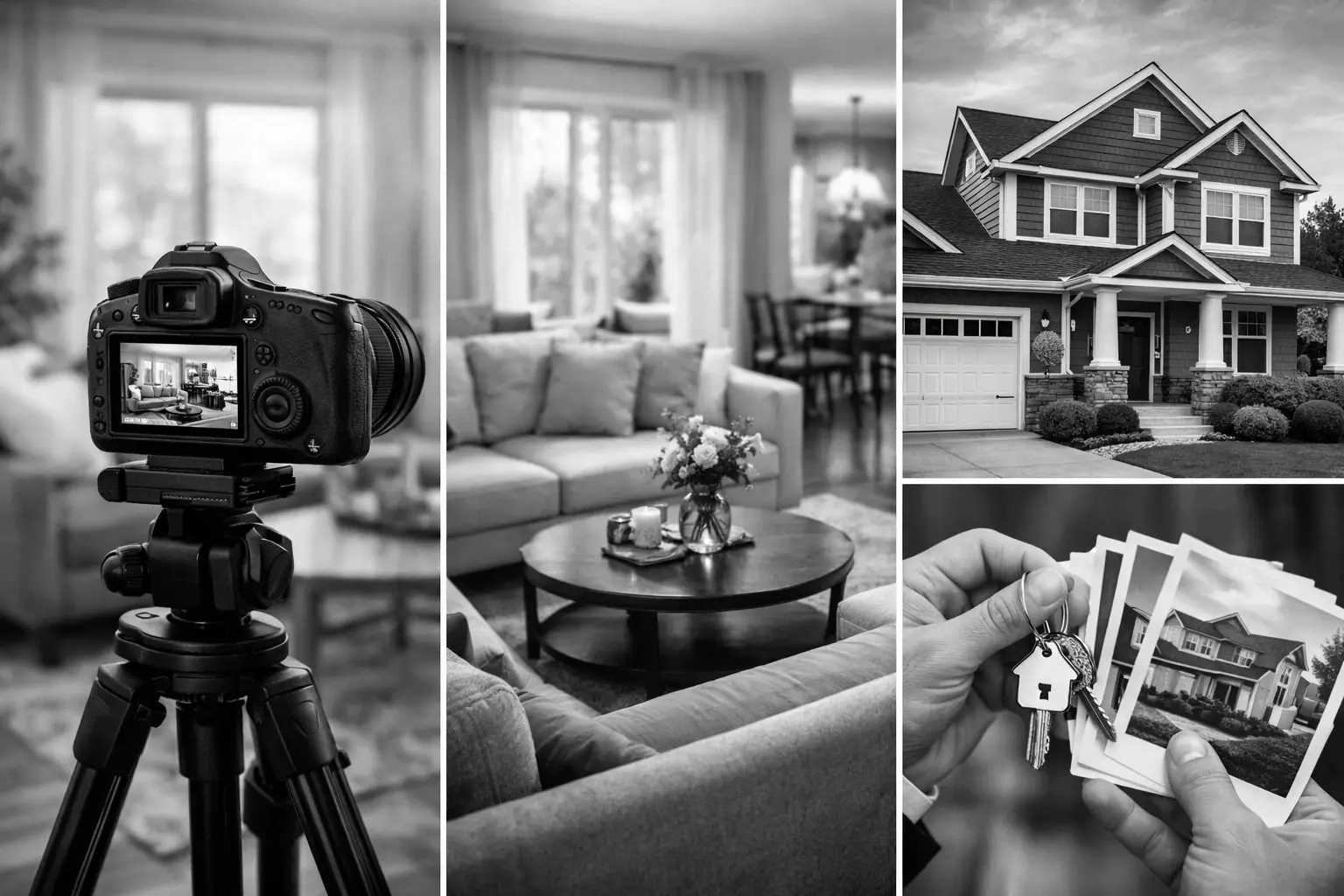
A seller can spend weeks repainting, decluttering, and fixing small defects, then lose buyer interest in two seconds because the first photo falls flat. That is why the best listing photos for home sale are not a cosmetic extra. They are part of the sales strategy, and they directly affect clicks, showings, and the strength of the offers that follow.
Using the best listing photos for home sale can significantly enhance a buyer’s perception of value.
In a market like Chicago and the suburbs, buyers move fast online. They are comparing your home against dozens of others in the same price range, often on a phone screen, often at night, and almost always before they ever book a tour. If the photos feel dark, cramped, crooked, or careless, buyers assume the home will too. Fair or not, that is how the market behaves.
Buyers are searching for homes with the best listing photos for home sale, making quality visuals essential.
What the best listing photos for home sale actually do
Understanding what makes the best listing photos for home sale can lead to quicker sales.
Great listing photos do not just make a house look pretty. They reduce friction. They help buyers understand the layout, feel the scale of the rooms, and imagine themselves living there. That sounds simple, but it changes behavior.
The best listing photos for home sale showcase the property in its most attractive light.
When photos are done well, buyers stay on the listing longer. They are more likely to save it, share it with a spouse, and schedule a showing. More showing activity can lead to more competition, and more competition gives sellers leverage. That does not mean every beautifully photographed home sells for top dollar on photos alone. Price, condition, timing, and location still matter. But weak photos can absolutely drag down a strong listing before the market gives it a real chance.
Investing in the best listing photos for home sale can attract more potential buyers.
There is also a net-proceeds angle that sellers should not ignore. If better presentation increases attention early, you have a better shot at strong activity in the first days on market, when your listing is freshest and buyers are most alert. That is a smarter way to protect value than cutting the price later because the launch underperformed.
Think strategically about the best listing photos for home sale that highlight key features.
Best listing photos for home sale start before the camera arrives
Preparation is key to achieving the best listing photos for home sale.
Photography day is not where the job starts. The best results come from preparation, and this is where many sellers underestimate the process.
Consider the importance of the best listing photos for home sale before photography day.
A photographer can improve angles, lighting, and composition. What they cannot do is make clutter disappear from every frame, fix an overstuffed room, or hide deferred maintenance that catches the eye in every shot. If a bedroom is being used as storage, it will photograph like a storage room. If kitchen counters are crowded with appliances, buyers will read the space as smaller than it is.
Clutter can detract from the best listing photos for home sale, so decluttering is essential.
This is why staging guidance matters. Not every home needs full furniture rental, and not every seller should spend heavily on cosmetic upgrades. But almost every listing benefits from editing the space. That may mean removing extra chairs, clearing counters, simplifying decor, and rethinking a room that has lost its purpose. Buyers should be able to tell at a glance whether they are looking at a dining room, office, guest room, or family room.
Staging is crucial for capturing the best listing photos for home sale that resonate with buyers.
Cleanliness matters too, more than sellers expect. Dust on dark floors, streaks on stainless steel, spots on mirrors, and smudges on windows all become visible in professional photography. The camera is unforgiving. It notices what sellers have become blind to after living in the home for years.
Clean homes lead to the best listing photos for home sale that buyers find appealing.
Which rooms matter most
Focus on the most photographed rooms for the best listing photos for home sale.
Not every room carries the same weight in a listing. The first image matters most, and after that, buyers are usually looking for reassurance in a familiar order. They want to see the exterior, kitchen, living areas, primary bedroom, primary bath, and any feature that feels like a real differentiator.
Highlighting the best features will lead to the best listing photos for home sale.
In many Chicago-area homes, that differentiator might be a renovated kitchen, a finished basement, a bright sunroom, a large backyard, or a clean, functional mudroom. In a condo, it could be skyline views, building amenities, or a truly spacious living area. In the suburbs, buyers may care more about lot size, family room flow, and usable outdoor space.
Strategically selected shots result in the best listing photos for home sale for your property.
That is where strategy comes in. The best photo package is not just a full set of images. It is the right set of images. Twenty excellent photos will usually outperform forty repetitive ones. Buyers do not need six nearly identical views of the same sofa. They need a clean visual story that helps them understand the home quickly.
The right visuals can be the best listing photos for home sale, attracting more interest.
What professional real estate photography gets right
Professional help can create the best listing photos for home sale that stand out.
There is a reason serious listings use professional photography. It is not about luxury. It is about competence.
Investing in skilled photographers ensures the best listing photos for home sale.
A professional photographer knows how to balance light from windows and interior fixtures so rooms do not look cave-like or blown out. They know how to compose a room so the dimensions make sense. They understand lens selection, vertical lines, and color correction. Those details sound technical, but the buyer experiences them emotionally. A room that feels bright and proportionate gets a different reaction than one that looks distorted or dim.
Buyers appreciate the best listing photos for home sale that capture true home proportions.
Phone cameras have improved, but that does not make DIY listing photography a smart bet for most sellers. A phone can be fine for a rental or a quick social post. For a home sale, especially in the mid-price and upper-price ranges, amateur photos often signal amateur representation. Buyers may not say that out loud, but they respond to it.
Trust in the best listing photos for home sale to present the home accurately.
There is also a trust issue. Overedited photos can backfire. If the grass is unnaturally green, the sky looks fake, or rooms appear much larger than they are in person, buyers feel misled when they arrive. Good photography should present the home at its best, not create a version of it that does not exist.
Overedited visuals can undermine the best listing photos for home sale.
Common photo mistakes that cost sellers attention
Avoid mistakes to ensure the best listing photos for home sale capture attention.
Some listing photos fail because the home was not ready. Others fail because the marketing was careless. Both cost real money when they suppress buyer interest.
Lighting is critical for achieving the best listing photos for home sale.
The most common mistake is poor lighting. Dark images feel depressing and make buyers assume the home lacks natural light. Another frequent issue is bad sequencing. If the first photo is a random secondary bedroom or a close-up of decor, the listing loses momentum immediately.
Sequencing shots properly leads to the best listing photos for home sale.
Then there are the avoidable distractions: toilet lids up, ceiling fans blurred in motion, cords visible everywhere, cars in the driveway, pets in the frame, magnets on the fridge, and reflections of the photographer in mirrors. None of these are catastrophic alone. Together, they make the listing feel sloppy.
Pay attention to details for the best listing photos for home sale that reflect quality.
The last major mistake is treating photos as an isolated task. They work best when they match the pricing strategy and the positioning of the home. If a property is priced to compete aggressively, the photos need to support that urgency. If the home is being marketed as updated and move-in ready, the visuals must prove it.
Your marketing strategy should align with the best listing photos for home sale.
How sellers should think about value, not just appearance
Value the best listing photos for home sale as part of your marketing toolkit.
The best listing photos for home sale are valuable because they support stronger marketing efficiency. That matters if you care about preserving equity.
Launch with the best listing photos for home sale to maximize exposure and interest.
A weak launch often creates expensive problems. Fewer showings can lead to longer days on market. Longer days on market can trigger buyer skepticism. Then the seller may feel pressure to cut price, offer concessions, or accept weaker terms. The photo budget that once felt optional suddenly looks very cheap compared with a five-figure price reduction.
Investing in the best listing photos for home sale is a smart financial decision.
That does not mean every seller should chase every premium visual add-on available. Sometimes drone photography is worth it, especially for larger lots, attractive rooflines, or homes near parks, water, or golf courses. Sometimes it adds little. Twilight photography can help if the exterior lighting and curb appeal are special. In other cases, daytime shots will do the job just fine. Floor plans can also be useful, particularly when the layout is a selling point or buyers need clarity before scheduling a showing.
Choose visuals that enhance the best listing photos for home sale experience for buyers.
The right approach depends on the property. Smart marketing is not about piling on extras. It is about choosing visuals that help buyers say yes to the next step.
Consider the impact of the best listing photos for home sale on buyer engagement.
How to judge whether your listing photos are strong enough
Evaluate whether your listing has the best listing photos for home sale that attract buyers.
Sellers do not need to be photographers to evaluate quality. Ask a simpler question: if this home appeared next to competing listings in your price range, would these photos make someone stop scrolling?
Strong visuals featuring the best listing photos for home sale can make a difference.
Look at the cover image first. Is it the strongest possible opening shot? Then look at brightness, straight lines, room flow, and whether the image order makes sense. You should also check whether the photos tell the truth. If buyers walk in and the home feels noticeably smaller, darker, or more dated than the listing suggested, the photography may have created the wrong expectation.
Buyers are looking for the best listing photos for home sale that inspire confidence.
A strong photo set should make the home feel appealing, clear, and credible. That mix matters. Buyers want to be impressed, but they also want to trust what they are seeing.
The best listing photos for home sale should feel authentic and trustworthy.
At Spot Real Estate, that is the standard serious sellers should expect from their marketing – not flashy for the sake of flashy, and not cheap-looking because someone cut corners in the wrong place.
At Spot Real Estate, we ensure the best listing photos for home sale are a top priority.
Selling a home is not just about getting it online. It is about getting buyers to care fast, before they move on to the next tab. The right photos help make that happen, and when they do, they are not an expense. They are one of the simplest ways to protect the money you have built in your home.
Protect your investment with the best listing photos for home sale that highlight value.